


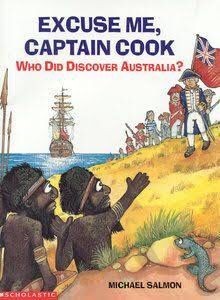

A very interesting read from one of the available logs of the first fleet.
11 different original ships logs survive this is an exert from 1 of them, all describe the landing in the same manner
Sydney Cove 1788, The first year of settlement of Australia, Original diaries* edited by Dr. John Cobley, Hodder, and Stoughton, 1962.
- All spelling is as found in Dr. Cobley’s edited diaries.
Sunday, 20th January 1788
Reasonable weather, with south-westerly winds. Temperature 74o. Barometer 30.20.
Lieutenant Clark “kist your dear image as usual on this day and read the prayers as usual on ditto.
The remainder of the fleet appeared off Botany Bay early and the master of the Supply went on board the Sirius as she approached the entrance. All ships entered the harbor and, as they passed, Lieutenant Clark “hailed the P. of Wales and Charlotte and ask the Lads on board how they did; answered all well. I also hailed the Lady Penryn and found them on board as well. A very fine day. It is not resolved on what side we shall settle yet. I wish they were a little quick about it. Tobit. Sidway was put out of irons on this day.”
The whole fleet was at anchor by 10 o’clock and White expressed the general feeling of pleasure and relief in these terms: “To see all the ships safe in their destined port without having, by any accident, been one hour separated; and all the people in as good health as could be expected or hoped for after so long a voyage, was a sight truly pleasing, and at every heart must rejoice.”
Clark sent a corporal and four men ashore for guard duty. The Sirius hoisted all the boats out and a party went in one tom cut grass for the cattle. The crew dried the sails and took on board a launch load of water. The Scarborough sent some hands ashore, with a guard, to cut grass. Orders were received in the Alexander “no person to land but where the guard was.”
King gives a detailed account f the day’s activities. “At 10 o’clock, the Governor, Lieut. Governor and Capt. Hunter went over to the south side of the Bay, a little within Point Sutherland, & I was ordered with Lieut. Dawes of the Marines, to explore all the Southside as high as possible. I ran up the southern shore till I rounded ….Point, off which lies a long shoal which is in many places quite dry at low water. We ran up the first inlet about a mile when we came to the head of it. I returned down again & crossed over to a point which, from what happened there, I gave it the name of Lance Point. Perceiving that it was the highest hill hereabout, I imagined it was probable that we should find some good water there; in landing. I ascended the hill & found the soil exceeding fine black mold, with some excellent Timber Trees & very rich grass. Arrived at the top of the hill, we perceive a red fox dog & soon after discovered several natives, who hallooed & made signs for us to return to our boats. Having only three marines with me & Lieut. Dawes, I advanced before them unarmed, presenting some beads & Ribbands. Two of the natives advanced armed but would not come close to me. I then drop the beads & baize which I held out for them, & retreated. They took it up & bound the baize about their head. They then, in a very vociferous manner, desired us begone & one of them threw a lance wide of us to shew how far they could do execution. The distance it was thrown was, as near as I could guess, about forty yards & when he took it out of the ground where it struck it required an exertion to pull it out.
“As I took this for a menace that more could be thrown at us if we did not retreat & being unwilling to fire amongst them, I retreated walking backward till I came to the brow of the hill, where I halted & again offered them presents, which they refused. On descending the hill, they showed themselves on top of it & were ten times more vociferous, and where soon after a lance was thrown amongst us, on which I ordered one of the marines to fire with powder only when they ran off with great precipitation. I embarked and Governor Phillip joined from the Southside of the bay where he had found the natives very sociable and friendly. We relanded on Lance Point & the same body of natives appeared brandishing their lances & defying us. However, we rowed close inshore & the Governor disembarked with some presents which one of them came and received. “Thus peace was re-established, much to the satisfaction of all parties.
They came around the boats and many little things were given to them, but what they wanted the most was the greatcoats & clothing but hats were more particularised by them, their admiration of which they expressed by very loud shouts, whenever one of us pulled our hats off. When they found us so friendly, they ran up to the man who had thrown the lance & made very significant signs of their displeasure at his conduct by pointing all their lances at him & looking at us, intimating that they waited for our orders to kill him. However, we made signs for them to desist & made the culprit a present of some beads, etc.
“Governor Phillip then went up another branch and I followed the one we were in & soon perceived that the natives were following us. We soon came to the head of this inlet, where we perceived the same party of Indians wading over. We rowed up to them & many of them came up to the boat. We made them a few more presents but found it necessary to put a stop to our generosity, as they were increasing fast in numbers &, having only a boat’s crew with me. I was apprehensive that they might find means to surprise us as every one of them was armed with lances & short bludgeons.
“I gave two of them a glass of wine, which they had no sooner tasted than they spit it out. We asked them the name of several articles. Which they told us & repeated our words, and already learned so much English as to express their wants for anything by putting their finger on it gently, looking me in the face and saying ‘NO’?. I must do them justice to say that I believe them to be conscientiously honest. When they found we were not disposed to part with any more things, they entered into conversation with us which was very fully interpreted by very plain signs.
“ They wanted to know of what sex we were, which they explained by pointing where it was distinguishable. As they took us for women, not having our beards grown, I ordered one of the people to undeceive them in this particular, when they made a great shout of admiration, and pointing to the shore, which was but ten yards from us, we saw a great number of Women & Girls, with infant children on their shoulders, make their appearance on the beach- all in puris naturalibus, pas meme la Feuille de figure. Those natives who were around the boat made signs for us to go with them & made us understand their persons were at our service. However, I declined these marks of their hospitality but showed a handkerchief, which I offered to one of the women, pointing her out. She immediately put her child down & came alongside the boat and suffered me to apply the handkerchief where Eve did the Fig Leaf; the natives then set up another very great shout & and my female visiter returned onshore. As the evening was coming on fast, and we were twelve miles from the fleet, it was time to return. We wished the natives good be wi’ ye, which they repeated. We got on board about midnight.
Captain Hunter expressed his views of Botany Bay: “We sounded the bay all over and found considerable extent anchorage in four, five, six and seven-fathom waters, but wholly exposed to easterly winds, and no possibility of finding shelter from those winds in any part of the anchorage…. The wind, either from the northeast or southeast quarters, set in a prodigious sea. Higher up the bay, there is a spot of four fathoms, where a few ships may be laid with tolerable security, but they must be lightened to enable them to pass over a flat of twelve feet and that depth but narrow limits.”
Bradley stated that the Governor took a guard of marines with him that “an officer and party of men were sent from the Sirius to clear away to a run of water on the south side of the Bay. The natives were well pleased with our people until they began clearing the ground, at which they were displeased and wanted them to be gone.”
In the evening, Bowes “went onshore in the boat with some of the ship’s company to the north side of the bay to haul the seine and caught a great many fish, all excellent eating. Upon first sight, one would be induced to think this a most fertile spot, as there are great numbers of very large and lofty trees reaching to the water’s edge and upon vacant spot between the trees appears to be covered with verdure. But upon a nearer inspection, the grass is found long and coarse, the trees very large and general hollow and the wood itself fit for no purpose of building or anything but fire. The soil to a great depth is nothing but black sand. Add to this, that every part of the grown is in a manner covered with black and red ants of a most enormous size.”
Worgan noted that the fish caught were mullet, bream, and sting-rays. Phillip was preparing to start the next morning to examine Port Jackson and Broken Bay. Having inspected Botany Bay, he had concluded that it was unsuitable for settlement. Though the bay was extensive, there was no shelter from easterly winds, and ships of moderate draught would always have to moor in an exposed situation. Parts of the land were swampy and the supply of freshwater was poor. Point Sutherland offered a fair situation, with a good stream, but lacked space for the camp. Ships could not moor close to the shore and unloading would be difficult.


You must be logged in to post a comment.