


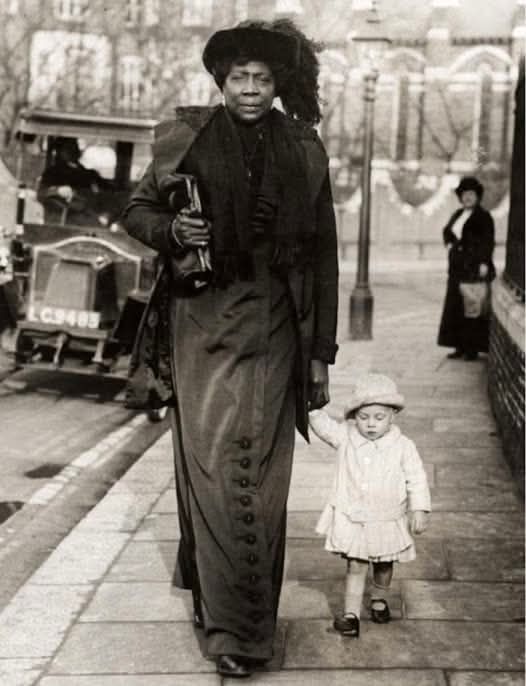
Ella Abomah Williams, popularly called Mme Abomah, is a compelling emblem of power and resistance within a narrative often dominated by colonial narratives. Hailing from the Kingdom of Dahomey—now known as Benin—her existence marks a pivotal juncture in socio-political history at the dawn of the 20th century.
In a notable photograph dating to around 1900, Ella is depicted towering over her peers, exuding an air of regality. Despite attempts by the British media to categorise her as an exotic curiosity, such framing inadequately reflects the complexity of her legacy. At approximately 2.5 meters in height, with assertions that she could heft a man using a single arm, her formidable physicality was complemented by her lineage’s profound cultural and historical significance.
Ella is considered a descendant of the Dahomey Amazons, an elite cohort of female warriors renowned for their martial prowess and critical strategic roles in the kingdom’s military defences. This lineage emphasises her strength and situates her within a broader context of female empowerment and resistance against colonial domination.
These corps functioned as soldiers and vital guardians of the state, exhibiting advanced training in melee and ranged combat techniques, including machetes, muskets, and unarmed combat.
When Ella arrives in Europe, the narrative constructed around her is reductive, referencing her as a “dark-skinned beauty” and a “giantess.” Such depictions serve to obscure the historical significance embodied in her presence. Instead of embracing her as an embodiment of a resilient empire led by women exerting authority rather than inheriting it, the media relegated her to the status of a sideshow attraction.
Ella’s global travels were not merely a testament to her endurance or survival within a colonial framework; they were a purposeful reclamation of a legacy often marginalised in historical discourse. She was an agent of memory, carrying forward the stories of women warriors whose contributions were vastly underrepresented.
Thus, Ella Abomah Williams transcended the confines of a singular image or narrative. She represents the silent strength of queens who, throughout history, have wielded power in myriad forms—not confined to custom, but resonating with the echoes of their predecessors.

You must be logged in to post a comment.