



On Christmas day 1859 Thomas Austin, a self-made wealthy settler, released 13 European wild rabbits on his estate, Winchelsea, Barwon Park, Victoria. They had been specially collected and sent to him by a relative in England.
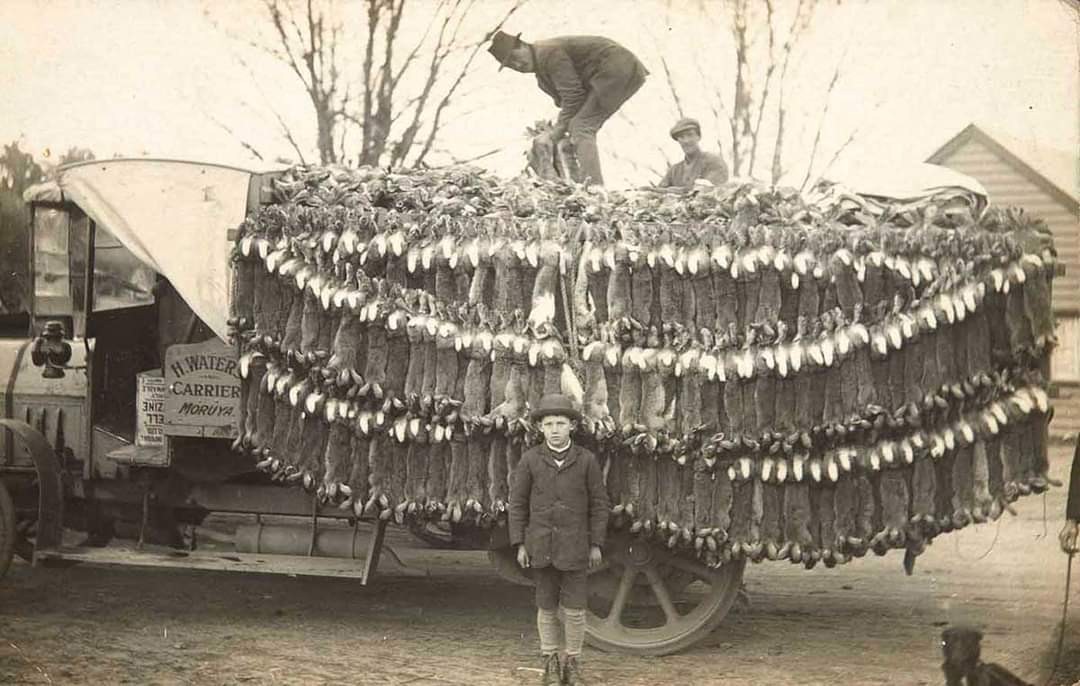
The results of the release of the European wild rabbits at Winchelsea was quickly apparent. By 1866 hunters bagged 14,000 rabbits on the Bawron Park estate. With abundant food sources, good ground cover and a lack of predators, the rabbits raced across the landscape.
By 1880 rabbits had crossed the Murray River to New South Wales and had reached Queensland by 1886. In 1894 they had traversed the Nullarbor and populated Western Australia.
To put the dissemination into context, the spread of rabbits over Britain took 700 years while the colonisation of two-thirds of Australia, an area 25 times the size of Britain, took only 50 years. The rate of spread of the rabbit in Australia was the fastest of a colonising mammal anywhere in the world.
Fences became an integral component of what settlers in the late 19th century began to see as a war against the rabbits. The first extensive fences were built in central New South Wales and the initial success of private fencing encouraged state governments to construct even longer ones.
Between 1885 and 1890 demand for wire netting increased from 1600 to 9600 kilometres per year. It is estimated that by the height of the fence construction boom there were 320,000 kilometres of rabbit-proof fence across Australia.
The most iconic barrier was the rabbit-proof fence built between 1901 and 1907 that extended 3256 kilometres north to south across Western Australia.

You must be logged in to post a comment.