


Ace History Desk – A Cat Left Paw Prints on the Pages of This Medieval Manuscript When the Ink Was Drying 500 Years Ago
Acenewsdaily

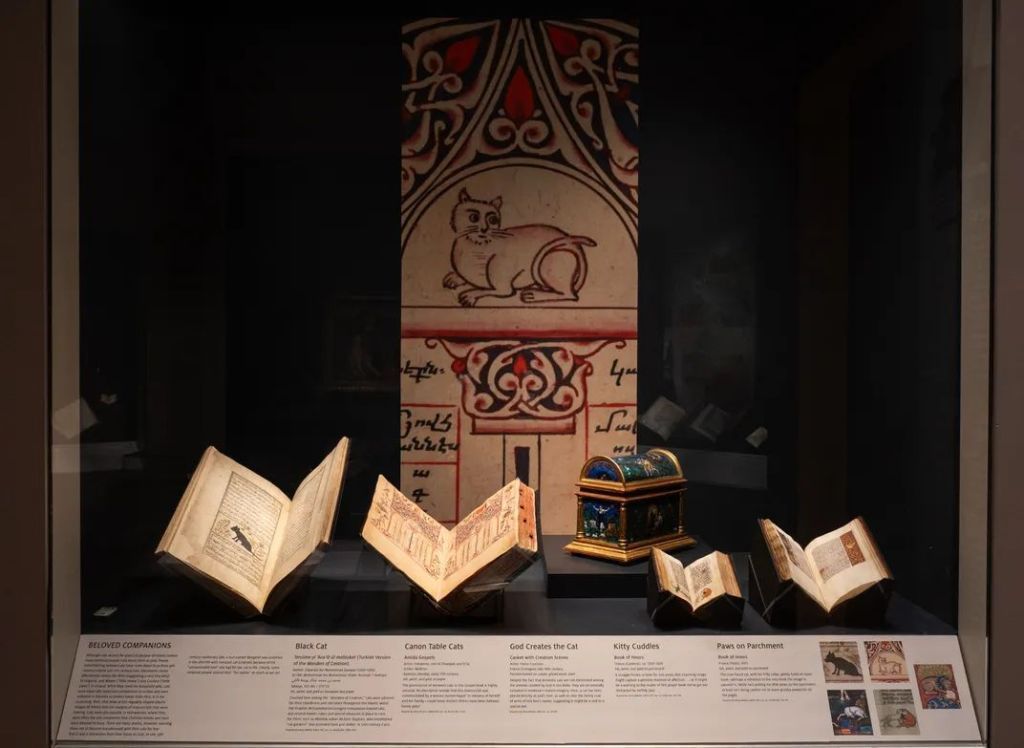
AAn exhibition called “Paws on Parchment” tracks how cats were depicted in the Middle Ages through texts and artworks from around the world—including one example of a 15th-century “keyboard cat”
Acenewsdaily
More than 500 years ago, after dedicating hours to the meticulous transcription of a crucial manuscript, a Flemish scribe set the parchment out to dry—only to later return and discover the page smeared, filled with inky paw prints.
Perhaps the world’s first known instance of a so-called “keyboard cat,” that manuscript is the inspiration for and centerpiece of an exhibition currently on display at Baltimore’s Walters Art Museum. Running through late February, “Paws on Parchment” explores the roles of cats in the Middle Ages—and the myriad ways humans showed affection for their feline friends hundreds of years ago.
“Objects like [the manuscript] have a way of bridging across time, as it’s just so relatable for anyone who has ever had a cat,” Lynley Anne Herbert, the museum’s curator of rare books and manuscripts, tells Artnet’s Margaret Carrigan. “Many medieval people loved their cats just as much as we do.”

This affection is evidenced by the myriad illustrations of cats across cultures. After finding the Flemish manuscript, Herbert searched the museum archives and found no shortage of other feline mentions or depictions in Islamic, Asian and other European texts and images.
One of the texts on view in the exhibition is a Turkish version of the Wonders of Creation, a 13th-century work of Islamic cosmography, which features an illustration of a black cat sitting among plants. The Prophet Muhammad cherished cats, which are important symbols in Islam. In the 13th century, Sultan Al-Zahir Baybars founded a cat gardenin Cairo to provide shelter and food for the stray animals.
Another copy of the Wonders of Creation
A 15th-century version of the text from either Iraq or eastern Turkey, which is currently held by the Smithsonian’s National Museum of Asian Art, similarly features cats painted in watercolor.
A 17th-century Armenian Gospel book on display in the exhibition, commissioned by a woman named Napat in remembrance of her and her family, contains myriad images of cats, who were presumably an important part of their home life. And a 15th-century painting called Madonna and Child With a Cat features a small kitten beside the newborn baby Jesus. The depiction is likely a reference to the lesser-told Christian legend that a cat gave birth to a litter of kittens inside the manger at the same time that Mary gave birth to Jesus, according to the museum.

Paws on Parchment” is the first of three animal-themed exhibitions planned at the Walters Art Museum in Baltimore over the next two years. The Walters Museum
“Because they were so stealthy and they could see in the dark, they were seen as a little bit ethereal as creatures,” Herbert told WYPR’s Ashley Sterner in August. “This sort of translates to the idea that that’s kind of the way the devil works. If you’re sinful, he can stalk you, and eventually he’ll pounce on you.”
In the margins of manuscripts on display, seemingly silly illustrations of cats playing instruments detail this double-sidedness. “[They] reinforce the importance of an orderly society by showing the chaos possible if the natural order of things got turned on its head,” Herbert tells Artnet.
But at the same time, humans relied on their pets’ killer instincts much more than they do today. Rats, mice and other vermin in the Middle Ages were more likely to carry disease, and housecats were an important defense for families.

“Their ability to catch and kill mice and rats was actually critical to healthy living,” Herbert told WYPR. “Those critters would often get into food stores and contaminate them or eat them. They would also chew on valuable things like cloth and books. … Very early on, people realized that cats were excellent mousers. They were actually defined in encyclopedias of the era by their ability to catch mice.”
“Paws on Parchment” is the first of three exhibitions over the next two years dedicated to animals in art. Its displays have already made an impression on viewers, human and feline alike. Shortly after its grand opening, in partnership with the Baltimore Animal Rescue and Care Shelter, of four 6-week-old foster kittens were given a private tour. Herbert adopted two of them.
“It’s been such an unexpected and special outcome, and I’m so grateful they scampered into my gallery and left their paw prints on my heart,” Herbert tells Artnet.
At Sterling Publishing & Media Service Agency, we prioritise transparency and accountability in all our operations. We wish to clarify that we are not responsible for any external content, hyperlinks, or costs associated with our services. Nevertheless, we remain committed to delivering outstanding services and greatly value your continued support. Thank you for your trust in us.
History acenewsdaily
You must be logged in to post a comment.