


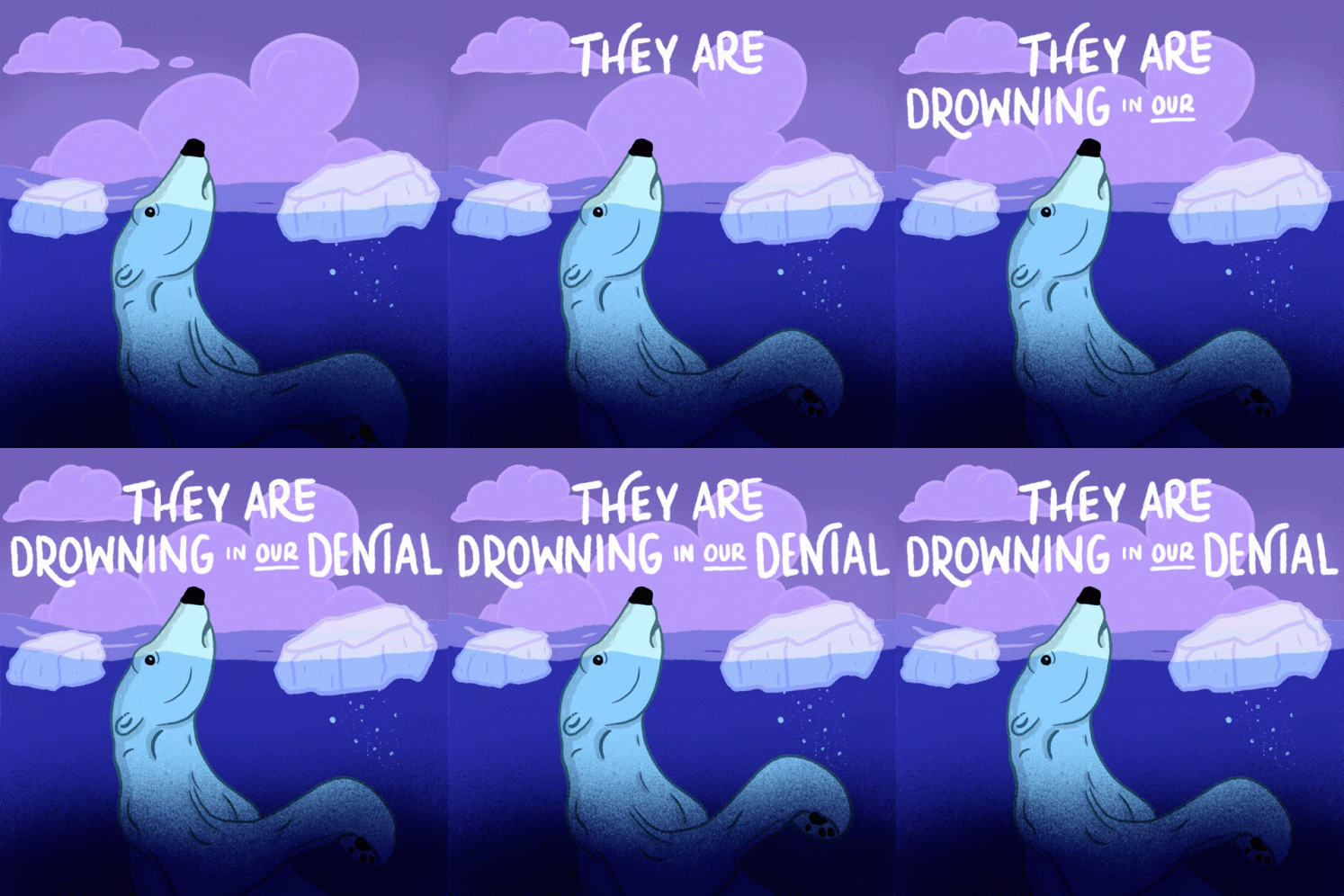

AceNewsDesk – Official confirmation has come in this morning that polar bears that have spent the summer fasting along Western Hudson Bay now have enough ice to move offshore

Ace Press News From Cutting Room Floor: Published: Dec.01: 2023: Polar Bear Science News: Posted on November 30, 2023: TELEGRAM Ace Daily News Link https://t.me/+PuI36tlDsM7GpOJe
That makes this year a bit later than usual (average is 16 November) but is not one of the extremely late freeze-ups, as happened in 1981, 2016 and 2021 when bears didn’t leave until the first week of December (Castro de la Guardia et al. 2017; Miller et al. 2022). Since breakup of sea ice came earlier than usual this summer, this means (as of 30 November) many bears will have been off the ice and without food for 166 days or 5.5 months.
However, so far, there have been no reports from this region of incidents of cannibalism, starving bears found wandering the landscape like zombies, or desperate attacks on people that polar bear specialists have warned us to expect (Abrahms et al. 2023; Stirling and Derocher 2012; Wilder et al. 2017).
Tracking WH Bears
Courtesy Andrew Derocher, University of Alberta, who monitors WH bears:

Close-up of the tracking map below. Note that pregnant females will stay ashore to give birth so not all of these tagged bears are expected to head onto the ice this fall to hunt for seals:

Still not a word from the Polar Bear Alert folks in Churchill, who as of today, haven’t released any of their weekly reports since 23 October 2023.
Ice Conditions in Canada
At 30 November 2023, courtesy Canadian Ice Services shows the expanding band of ice developing along the western shore of Hudson Bay but note also that the rest of the Canadian Arctic, as well as the Beaufort Sea, is completely covered in ice, as is most of Baffin Bay and Foxe Basin:

References
Abrahms, B., Carter, N.H., Clark-Wolf, T.J., et al. 2023. Climate change as a global amplifier of human–wildlife conflict. Nature Climate Change 13:224-234. https://doi.org/10.1038/s41558-023-01608-5
Castro de la Guardia, L., Myers, P.G., Derocher, A.E., Lunn, N.J., Terwisscha van Scheltinga, A.D. 2017. Sea ice cycle in western Hudson Bay, Canada, from a polar bear perspective. Marine Ecology Progress Series 564: 225–233. http://www.int-res.com/abstracts/meps/v564/p225-233/
Miller, E.N., Lunn, N.J., McGeachy, D., and Derocher, A.E. 2022.Autumn migration phenology of polar bears (Ursus maritimus) in Hudson Bay, Canada. Polar Biology 45:1023-1034.
Stirling, I. and Derocher, A.E. 2012. Effects of climate warming on polar bears: a review of the evidence. Global Change Biology 18(9): 2694–2706.
Wilder, J.M., Vongraven, D., Atwood, T., et al. 2017. Polar bear attacks on humans: implications of a changing climate. Wildlife Society Bulletin41(3):537-547. https://doi.org/10.1002/wsb.783
Editor says …Sterling Publishing & Media Service Agency is not responsible for the content of external site or from any reports, posts or links and thanks for following as always appreciate every like, reblog or retweet and comment thank you
@acenewsservices

You must be logged in to post a comment.